Inner Luster: How Eastern Philosophy Quietly Redefined What Discerning Clients Seek in a Companion
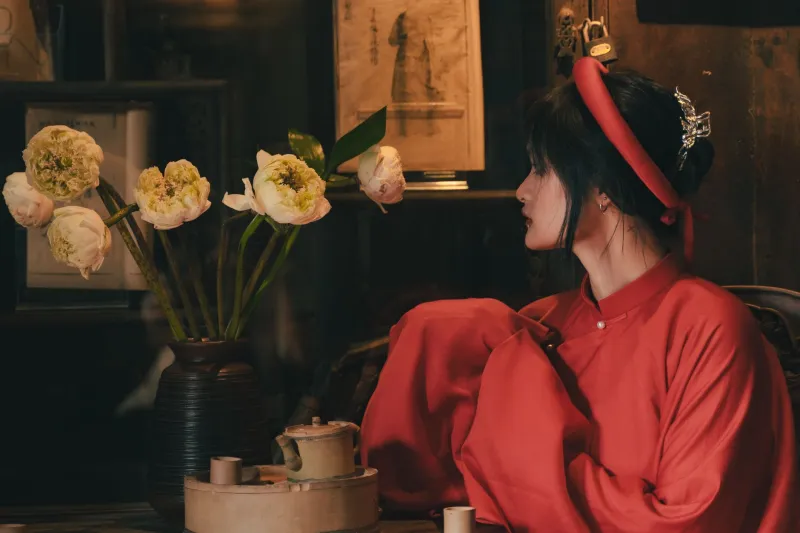
There is a reason jade has been treasured across Asian civilizations for thousands of years while other precious materials have come and gone in and out of fashion. It is not simply the stone's color or its rarity. It is the quality that ancient scholars called wen — an inner luminosity that reveals itself only when the stone is held to the light, turned slowly, and observed with patience. The surface tells you very little. The interior tells you everything.
This same principle, quietly woven into classical Eastern philosophy, is reshaping the expectations of the most thoughtful clients who seek premium companionship in America today. What was once evaluated primarily through aesthetic criteria — appearance, poise, surface-level charm — is increasingly measured by a more nuanced standard. One that asks: what lives beneath?
The Shift Toward Substantive Depth
In major American cities from New York to San Francisco, a perceptible shift is underway among clients who engage with premium companions regularly. These gentlemen — typically well-traveled, professionally accomplished, and culturally literate — have grown discerning in ways that go well beyond the visual. They have attended enough dinners, events, and private engagements to understand that beauty without depth creates an evening that ends the moment the conversation is expected to begin.
What they are seeking instead reflects something that Confucian philosophy articulated with remarkable precision: the concept of junzi, or the cultivated person. In classical Chinese thought, the junzi was not defined by birth or wealth, but by continuous self-refinement — intellectual curiosity, emotional restraint, moral consistency, and genuine engagement with the world. These qualities, ancient in origin, translate with surprising directness into the modern language of exceptional companionship.
A companion who embodies these values does not simply occupy space gracefully. She brings perspective to a conversation about international markets, asks a follow-up question that reveals she was genuinely listening, and carries herself with a composure that is neither performative nor stiff — but rooted in something real.
Balance as a Living Practice
Central to Taoist philosophy is the principle of balance — not as a static achievement, but as a continuous, dynamic practice. The concept of yin and yang is often reduced in Western popular culture to a decorative symbol, but its original meaning is far more instructive. It describes two forces in perpetual, responsive relationship: neither dominant, neither absent, each giving meaning to the other.
For a companion engagement to reach its highest potential, a similar balance must be present. The companion who is entirely accommodating without independent thought creates a dynamic that sophisticated clients often describe as hollow. Conversely, a presence that is assertive without sensitivity misreads the room entirely. What the most memorable engagements share is a quality of genuine responsiveness — the capacity to read the emotional register of a given moment and contribute to it thoughtfully.
This is not a skill that can be rehearsed through a checklist. It is cultivated through genuine self-awareness, curiosity about others, and a willingness to be present rather than simply prepared.
Mindfulness and the Quality of Attention
Buddhist philosophy introduced to the world a concept that has since been adopted — and frequently diluted — by Western wellness culture: mindfulness. In its original context, mindfulness was not a stress-management technique. It was a disciplined practice of full, non-judgmental attention to the present moment.
In the context of premium companionship, this quality manifests as something clients can feel immediately but often struggle to name. It is the difference between a companion who is physically present and one who is genuinely there — attentive to the cadence of the conversation, the unspoken preferences of her client, the energy of a room, and the subtle shifts in mood that occur across an evening.
Clients who have experienced this quality of attention consistently describe it as rare. And they are correct. It requires not merely good manners or professional training, but a genuine orientation toward the other person — an interest that is neither manufactured nor transactional.
The Cultivation Imperative
One of the most practical implications of Eastern philosophical tradition for modern companionship is what might be called the cultivation imperative: the understanding that excellence is not a destination but a continuous process. The Japanese concept of kaizen — incremental, ongoing improvement — reflects this orientation clearly. So does the Chinese scholarly tradition of lifelong learning, in which the pursuit of knowledge was considered a moral responsibility rather than a professional credential.
Companions who embody this standard invest in themselves consistently. They read broadly, engage with art and current events, travel when possible, and reflect on their own experiences with genuine introspection. The result is a presence that evolves — one that brings something new to each engagement rather than recycling the same curated persona.
For clients who engage with premium companions as a meaningful part of their social and intellectual lives, this quality is not a luxury. It is a baseline expectation.
What Clients Can Do to Invite This Quality
It is worth noting that Eastern philosophy places responsibility on both parties in any meaningful exchange. The Confucian ideal of the cultivated person was never meant to describe only one side of a relationship. The junzi was expected to bring genuine engagement, intellectual honesty, and respectful conduct to every interaction.
Clients who approach an engagement with curiosity rather than expectation, who ask thoughtful questions rather than issuing directives, and who express appreciation with sincerity rather than formality tend to draw out the very qualities they are seeking. The quality of a companion's presence is, to a meaningful degree, a reflection of the quality of attention she receives.
This is perhaps the most elegant lesson Eastern philosophy offers to the modern companionship context: that genuine connection is not a service delivered in one direction, but a dynamic created between two people who each bring their full selves to the encounter.
The Standard That Endures
Jade has outlasted empires, fashions, and centuries of changing taste because its value is intrinsic rather than assigned. It does not require a trend to validate it. The same is true of the qualities that classical Eastern philosophy has long identified as the markers of genuine human excellence — depth, balance, mindfulness, and continuous cultivation.
As the premium companionship landscape in America continues to mature, these are precisely the qualities that distinguish extraordinary engagements from merely pleasant ones. They cannot be filtered for in a photograph or inferred from a brief introduction. They reveal themselves slowly, the way jade reveals its inner light — to those patient and perceptive enough to look.