Heard Without Words: The Quiet Mastery of Attentive Listening in Premium Companionship
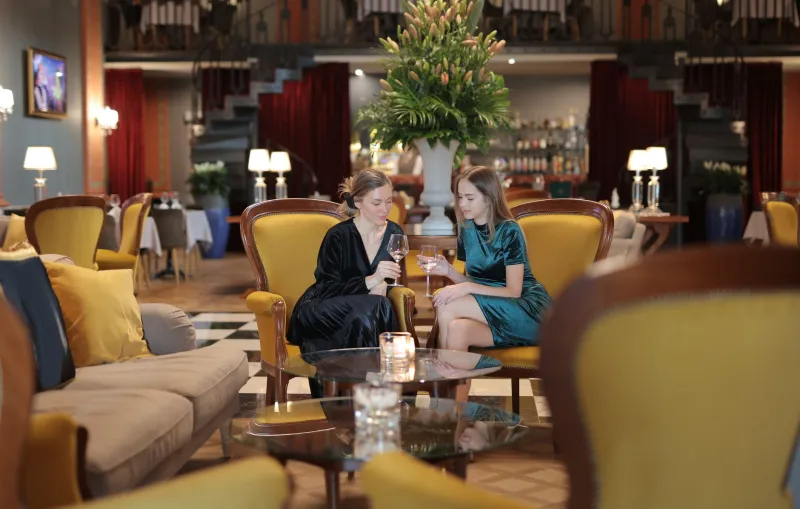
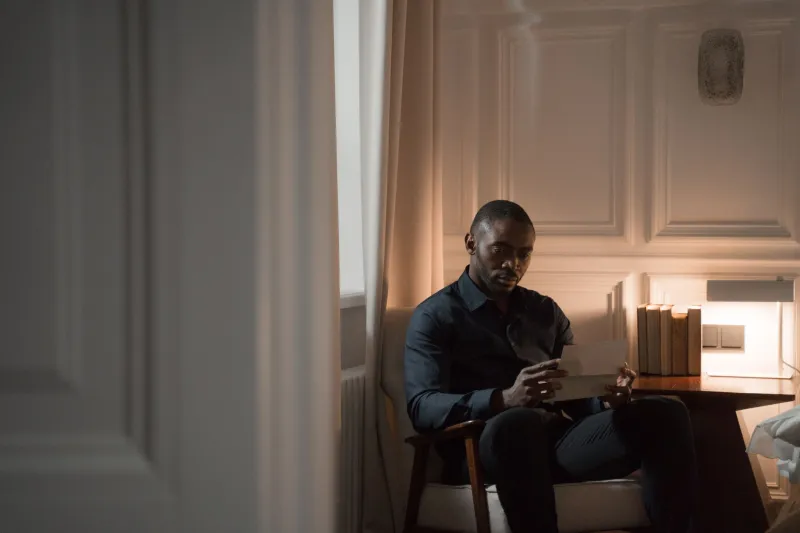
In the landscape of premium companionship, conversation is currency. Yet the most valuable exchanges are rarely defined by what is spoken aloud. They are shaped, instead, by what is perceived beneath the surface—the slight tension in a man's shoulders after a difficult week, the way his voice drops half a register when a subject carries personal weight, the pause that lingers just a moment too long before he answers a question he was not quite prepared to face.
The companions featured within Jade Companions understand something that many professionals in any field never fully grasp: listening is not waiting for your turn to speak. It is a complete reorientation of attention toward another human being, executed with discipline, warmth, and an almost architectural precision.
The Distinction Between Hearing and Truly Listening
Most people hear. Far fewer actually listen. The difference is not merely semantic—it is neurological, behavioral, and ultimately relational.
Hearing is the passive processing of sound. Listening, in its fullest expression, involves the simultaneous interpretation of verbal content, vocal tone, physical posture, facial microexpressions, pacing, and the emotional subtext that runs beneath all of these channels at once. Psychologists sometimes refer to this as multi-channel attunement—the capacity to receive and synthesize information from multiple streams of communication simultaneously.
For premium companions, this capacity is not incidental. It is cultivated deliberately, refined through experience, and treated as a core professional competency on par with poise, conversational range, or cultural fluency.
The Architecture of Active Listening
Active listening, as a formal psychological framework, was developed in part through the humanistic psychology movement of the mid-twentieth century—most notably through the work of Carl Rogers, who argued that genuine empathic understanding requires the listener to temporarily set aside their own frame of reference and enter, as fully as possible, the experiential world of the person speaking.
For companions operating at the premium level, this translates into several concrete, observable practices.
Reflective acknowledgment is perhaps the most foundational. Rather than immediately responding to a client's statement with a counterpoint or a new topic, an attentive companion will first reflect back the emotional content of what was shared—not mimicking the words, but confirming that the feeling behind them has been received. This simple act communicates something profound: you have been seen.
Calibrated silence is equally significant. Many people are uncomfortable with conversational pauses and rush to fill them. A companion with genuine listening mastery understands that silence, offered at the right moment, creates space for a client to arrive at something he might not have reached if the conversation had continued uninterrupted. Some of the most meaningful disclosures in any relationship occur in those unhurried silences.
Tonal mirroring—the subtle, unconscious synchronization of one's own vocal register and pacing with that of the person speaking—signals psychological safety without a single word being exchanged. When done naturally and without affectation, it communicates presence and attentiveness at a register the client may never consciously identify, but will almost certainly feel.
Reading the Unspoken Language
A significant portion of human communication is nonverbal. Research in social psychology has long established that body language, facial expression, and paralinguistic cues—the rhythm, pitch, and texture of speech—carry as much or more emotional information than the literal content of words.
Premium companions develop a particular sensitivity to these channels. They notice when a client's posture closes slightly upon a certain topic, suggesting discomfort or reluctance. They register the difference between a laugh that is genuinely relaxed and one that is performative—deployed to deflect rather than to connect. They observe the direction of a client's gaze during a pause, understanding that where attention drifts often reveals where the mind truly resides.
This is not surveillance. It is care made perceptive. The intention behind this attentiveness is always to serve the quality of the encounter—to understand what a client genuinely needs from the evening, whether that is stimulating intellectual exchange, quiet companionship, the validation of being truly heard, or simply the relief of spending time with someone who is entirely, unhurriedly present.
The Role of Emotional Intelligence in High-Stakes Conversations
Many of the gentlemen who engage premium companions through platforms such as Jade Companions lead lives of considerable complexity. They may occupy positions of significant professional responsibility, navigate intricate personal circumstances, or simply carry the accumulated weight of lives lived with intensity and purpose. In these contexts, conversation is rarely trivial.
Emotional intelligence—the capacity to accurately perceive, understand, and manage both one's own emotions and those of others—is the foundation upon which genuine listening is built. A companion with high emotional intelligence does not merely process what a client says; she senses the emotional climate of the room and adjusts accordingly, knowing when to engage with warmth and levity, and when to hold space with quiet steadiness.
This quality is particularly essential during what might be called high-stakes conversations: moments when a client shares something vulnerable, professionally significant, or personally complex. In these instances, an ill-timed response, a distracted glance, or a failure to register the gravity of what has been shared can fracture the sense of trust that defines a truly exceptional engagement. Conversely, a companion who navigates these moments with grace and genuine attentiveness creates something rare—a relationship, however bounded, in which a man feels genuinely understood.
Presence as the Ultimate Form of Respect
In an age defined by fragmented attention—the persistent pull of screens, notifications, and the ambient noise of modern life—the gift of undivided presence has become genuinely rare. To sit across from someone who is entirely focused on you, who has set aside every competing priority in favor of this moment and this conversation, is an experience that most people encounter far less frequently than they deserve.
This is, ultimately, what the finest companions offer. Not merely beauty, nor wit, nor cultural sophistication—though all of these have their place. What distinguishes a truly exceptional companion is the quality of her attention: steady, perceptive, unhurried, and genuinely invested in the person seated across from her.
At Jade Companions, this standard of attentiveness is not an aspiration. It is a baseline expectation—one that reflects the broader philosophy that genuine connection, even within the context of a professional engagement, is both possible and worth pursuing with the full commitment of one's presence.
The most eloquent words in any conversation, after all, are often the ones that go unspoken. What matters is whether someone is truly listening for them.